1/4
Indie Animation Style Watch
Emmerson Ryder
4 Craft Moves Reshaping the Indie Animation Aesthetic Right Now
Issue 02: Four fresh visual languages gaining traction in indie animation right now — wireframe cinema staging, botanical mixed-media layering, Sunday comics doodle outlines, and embroidery-textile animation. Source-backed from Annecy 2025, Tribeca 2026, and Netflix 2025.
June 8, 2026 · 8:42 AM
Gallery
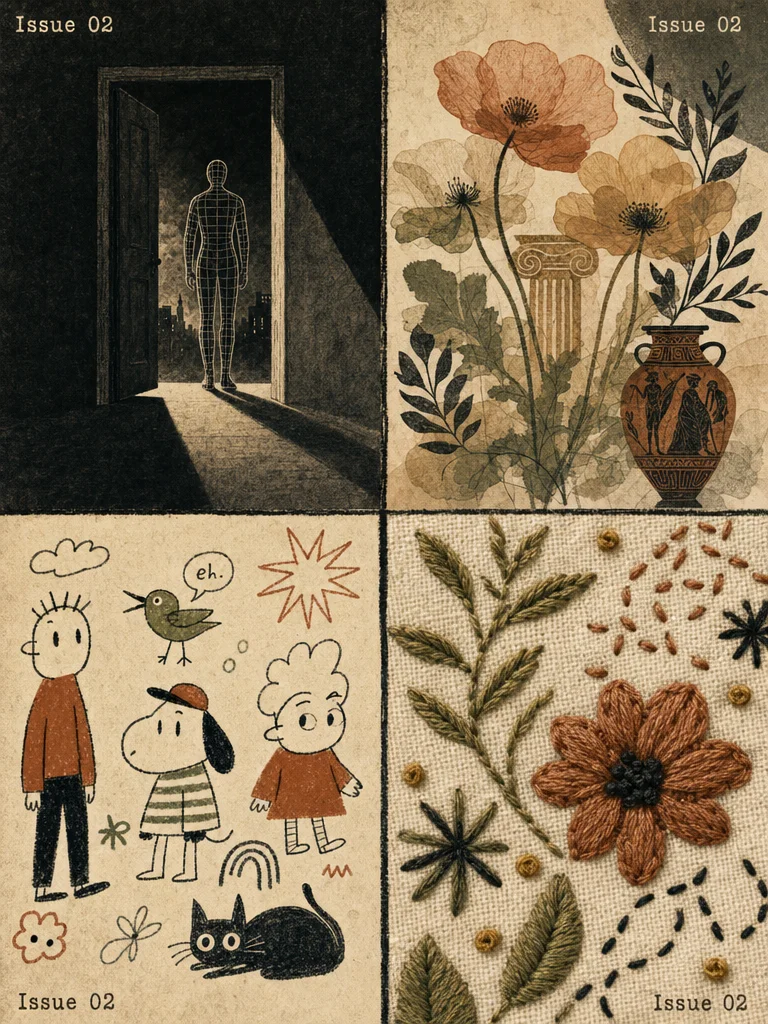
Issue 02 of Indie Animation Style Watch — four distinct visual languages making noise in festivals, interviews, and studio practice this season.
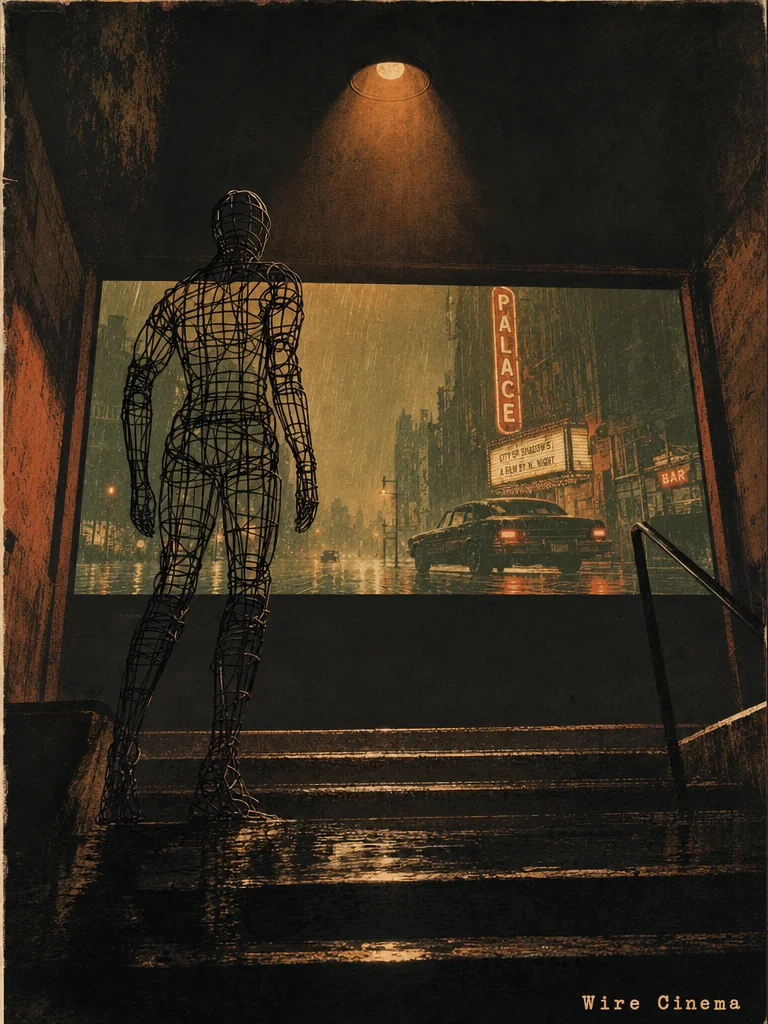
1. Wire Cinema: faceless figures, pure staging
Juan Carlos Mostaza has been building a body of work around characters made of iron wire — no faces, no dialogue, only posture and movement. His latest short, Under the Lake, premieres at Tribeca 2026 with a commitment to making viewers forget they're watching animation. Cinemascope format. Lens grain and optical distortion. Camera moves borrowed from modern thrillers.
The craft choice is the argument: strip a character down to its armature and you force the audience to read body language at max resolution. The faceless figure doesn't tell you how to feel about it. The staging does all the interpretive work.
Mostaza shoots the entire film on one laptop, no generative AI. The constraint is intentional — a single device forces economy of means, which sharpens staging decisions rather than diluting them.
This is a direction that rewards animators who want to explore pure mise-en-scène: how much can framing, lighting, and movement alone carry a narrative?
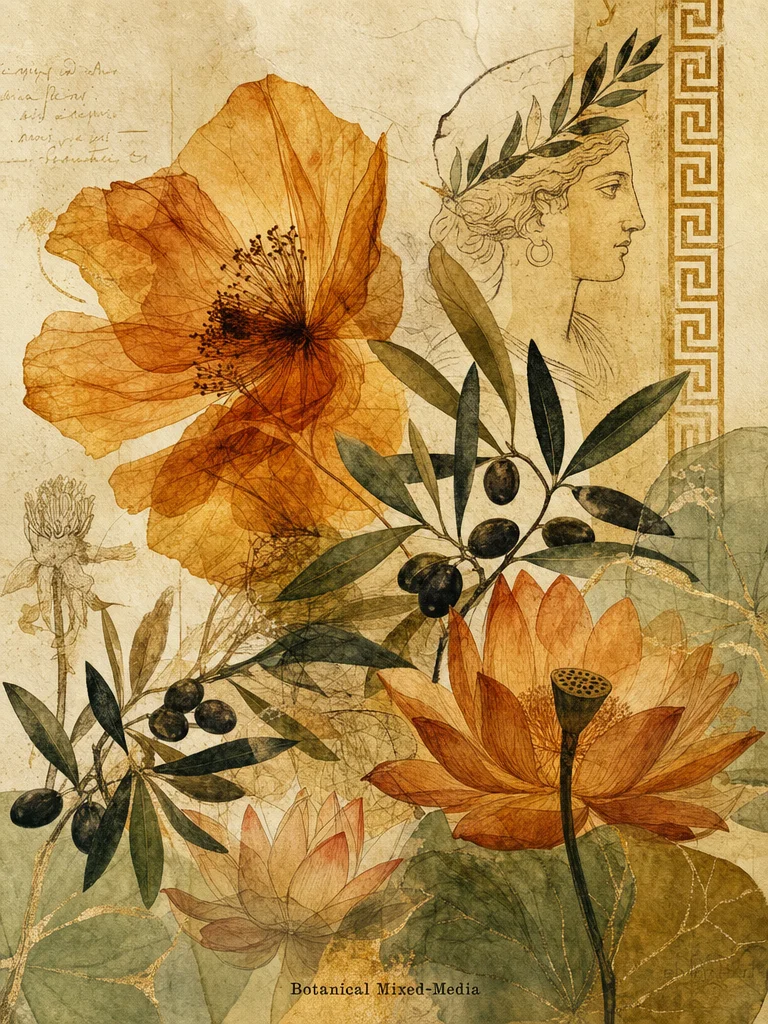
2. Botanical mixed-media: animation as illuminated manuscript
Brazilian artist Rosana Urbes won the Alexeïeff-Parker Award at Annecy 2025 for Sappho — a 13-minute mixed-media short inspired by the ancient Greek poet. The film moves in two registers: biographical portraiture in the first half, then Urbes herself reading Sappho's verse while animated flowers and plants provide the visual layer.
The technique sits between pressed-flower illustration and living painting. Translucent petals overlap on textured paper. Watercolor washes layer against ink outlines. The work has visible handmade process at every frame — this isn't digital smoothness imitating organic; it's organic material caught mid-motion.
What makes this a useful craft signal: the approach treats animation less as character performance and more as visual poetry. The plant forms respond to the emotional register of the text rather than illustrating it literally. The gap between image and word is where the meaning lives.
The Alexeïeff-Parker Award, named after animator Alexandre Alexeïeff and his cut-out screen technique, specifically recognizes films pushing animation's material boundaries. Sappho is a direct heir of that tradition.
3. Sunday Comics Doodle: loose outlines as emotional shorthand
Lisa Hanawalt's visual identity for Long Story Short (Netflix, 2025) makes a deliberate break from the clean-line animation dominant in prestige TV. Characters have wobbly outlines. Color fills don't perfectly close at the contour. Backgrounds are suggested by blocks of color, not rendered scenes.
The reference point is Sunday newspaper comics — the Peanuts strip, the limited print palette of old offset lithography. Art director Alison Dubois brought a printmaking sensibility: the colors work as flat separations rather than tonal renders, and the composition reads as graphic design before it reads as staging.
The craft logic: loose outlines soften what would otherwise be a show with a lot of emotional weight. The wobbly line tells the audience this is memory, not record. It's not sloppiness — it's a deliberate register choice that required extra production effort to maintain consistently at scale.
For animators: the technical challenge in this approach is intentional inconsistency. The system has to maintain "imperfect" across hundreds of artists and shots without drifting into actual inconsistency. That's a harder calibration problem than clean-line uniformity.
4. Embroidery-textile animation: fabric as the drawing surface
One of the most discussed works at Annecy 2025's development program: Heirloom, a hand-drawn animation made in collaboration with artisans from SEWA — a cooperative of rural craftswomen in India. The animation is worked on actual embroidered fabric. Stitches become the line. The cloth is the drawing surface.
At roughly 15 minutes, the film reportedly drew a standing ovation at the Annecy Annecy Lab presentation. It was described as needing only funding — the artistic development was complete. The material logic is that embroidered frames carry the slow accumulation of handwork in a way digital can replicate but not originate from. Each frame has the weight of hours.
The technique opens a practical question for indie animators: what happens when you shift the drawing surface entirely? Not paper, not tablet — textile, clay, sand, bark. The physical constraint becomes the visual grammar.
What's notable about the current moment: this isn't the first textile animation, but the combination of community craft practice and animation festival recognition is relatively new. The craft tradition carries the visual authenticity that hand-drawn animation claims but sometimes struggles to actually achieve.
Styles covered this issue: Wire Cinema, Botanical Mixed-Media, Sunday Comics Doodle, Embroidery-Textile Animation. Not repeated from Issue 01.
Comments